
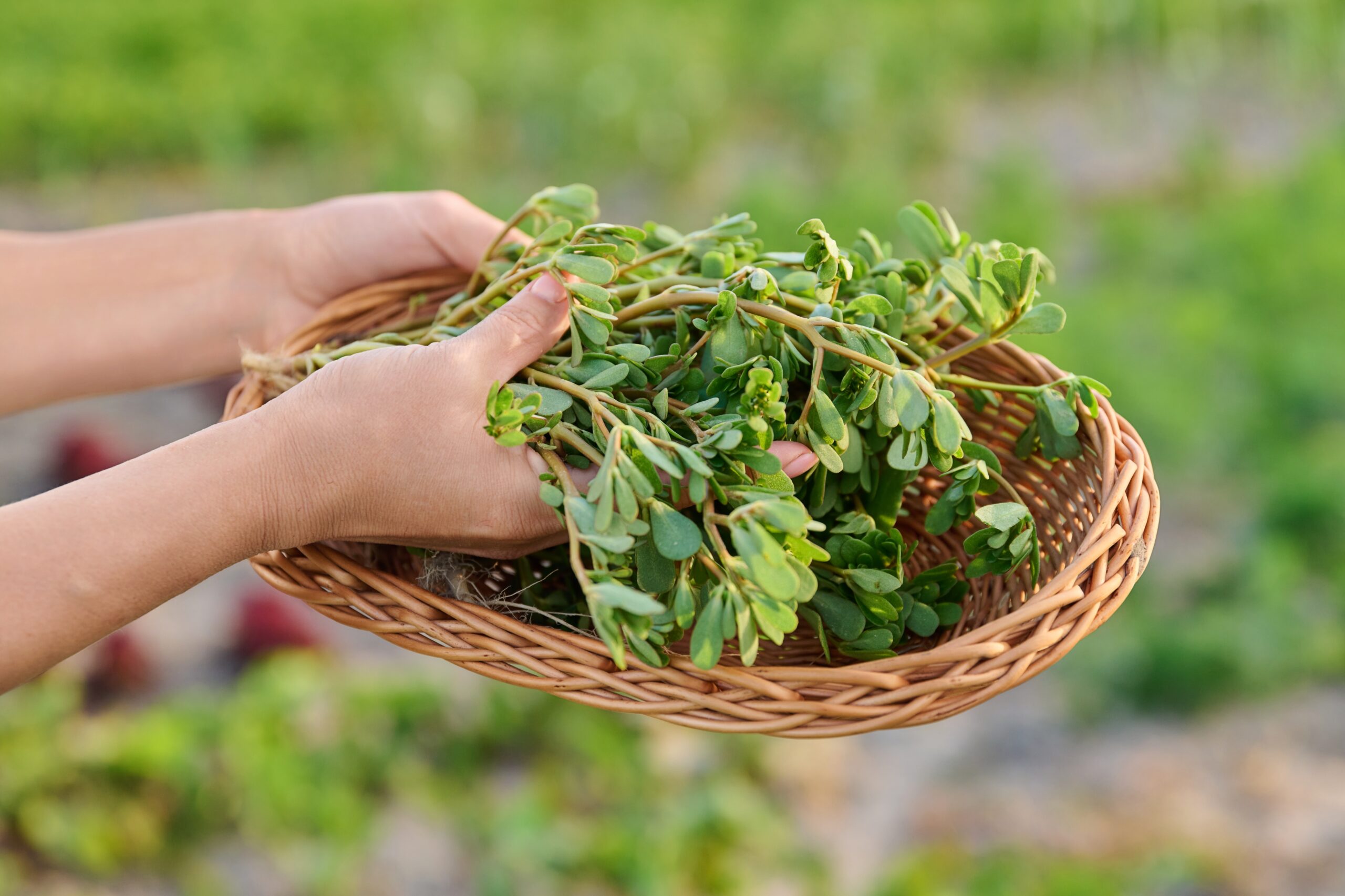
When summer sun hits its stride and the soil warms to about 86°F, one humble yet powerful plant begins to show up in gardens, lawns, and even cracks in the pavement: purslane (Portulaca oleracea). It often grows where sprinkler runoff puddles and spreads like a green carpet—thick, sprawling, and determined.
You might think of it as just another weed, but purslane is anything but ordinary. It’s one of the mostnutrient-dense leafy greens you’ll ever come across, and it has a fascinating history to boot.
What Makes Purslane So Special?
Purslane is a semi succulent annual herb that thrives in the heat and is often overlooked in modern gardens. But here’s why I love it—and why you should consider adding it to your meals:
- Rich in Omega-3 Fatty Acids
Purslane contains more alpha-linolenic acid (ALA)—a type of omega-3—than any other leafy plant. That’s more than spinach or kale! - High in Fiber
Supports gut health, promotes regularity, and keeps you feeling full longer. - Low in Oxalates
Unlike spinach, purslane is gentler on the kidneys, making it a better choice for those prone to kidney stones. - Packed with Antioxidants
Including vitamins A, C, and E—plus glutathione, melatonin, and betalains. - Mineral-Rich
A good source of potassium, magnesium, calcium, iron, and phosphorus. - Hydrating & Refreshing
Its slightly sour, salty crunch makes it a perfect pick-me-up during a hot day in the garden. I often grab a handful and chew the stems and leaves like a mid-day field snack—it lifts my spirits instantly!
How to Use Purslane in the Kitchen
Purslane is incredibly versatile. You can:
- Toss it raw into salads for a citrusy crunch
- Sauté it lightly with garlic and olive oil
- Add to stews or stir-fries for a succulent texture
- Blend into chutneys or dips
- Pickle it or ferment it as part of your gut-healing toolkit
It’s a true superfood—fresh, local, seasonal, and wild!
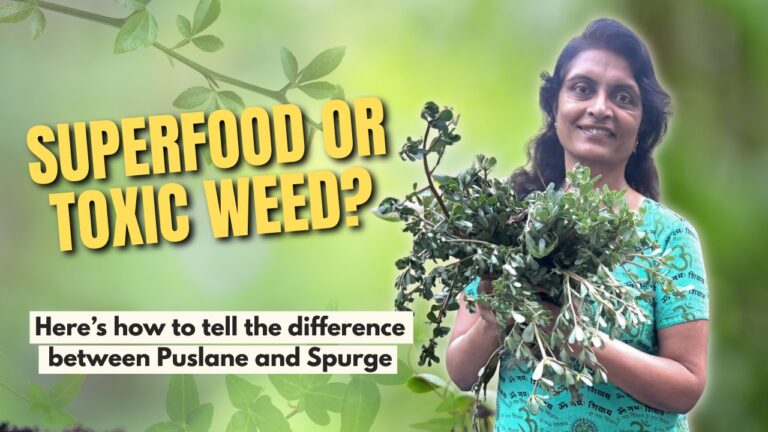
Purslane vs. Spurge: How to Tell the Difference
Before you forage or harvest purslane, be sure you’re not picking its toxic look-alike: spotted spurge (Euphorbia maculata). While they may grow in similar places and look alike at a glance, they are very different plants—and only one is edible.
Here’s a simple guide to help you differentiate:
| Feature | Purslane | Spurge |
| Leaves | Thick, fleshy, dark green; smooth edges | Flat, thin; often with a purplish spot; edges may be toothed |
| Leaf Pattern | Grows in clusters of 4 (“star-shaped” or whorled) | Always in opposite pairs |
| Stems | Smooth and hairless | Hairy stems, sometimes hairy leaves |
| Flowers | Tiny yellow flowers | Tiny pink flowers |
| Sap | Clear if any; no white latex | White, milky sap (latex), can be irritating or toxic |
| Edibility | Edible superfood | Toxic and not safe to eat |
Ancient and Global Roots
Although purslane is considered Eurasian in origin, seeds have been found at pre-Columbian archaeological sites in the Americas, indicating it’s native here too. That means indigenous peoples likely recognized its value long before modern nutrition science confirmed it.
In the Garden: A Friendly Neighbor
Purslane isn’t just good on your plate—it’s good for your garden:
- Acts as a companion plant
- Helps retain soil moisture
- Can reduce soil erosion with its dense mat-like growth
Let it grow (in moderation), and it will reward your soil and your salad bowl.
A Wild Gift Worth Celebrating
Purslane is more than a weed—it’s a vibrant, healing, nutrient-packed green that thrives in the wild and nourishes deeply. So next time you see it underfoot, don’t pull it—pick it, taste it, and let nature feed you.
Purslane or Spurge? Here’s How to Tell Them Apart
Your Visual ID Guide to Foraging Safely
Before you add that succulent green to your salad or sauté pan, make sure you’ve correctly identified it. Purslane (Portulaca oleracea) has a toxic look-alike: Spotted Spurge (Euphorbia maculata). These two common summer weeds often grow side-by-side in yards, sidewalk cracks, and gardens—and telling them apart can be tricky if you don’t know what to look for.
Here’s a quick visual guide with key differences, and tips you can use in the field.
(Insert clear, close-up photos here for each category below: leaves, stem, growth pattern, sap)
| Feature | Purslane | Spurge |
| Leaves | Thick, fleshy, succulent; deep green; smooth edges | Thin, flat; may have reddish center spot; often toothed |
| Leaf Arrangement | Clustered in groups of 4 (star/whorl-like) | Opposite pairs (always 2 leaves per node) |
| Stem Texture | Smooth, reddish or green; hairless | Thin, hairy stems (and sometimes hairy leaves) |
| Flowers | Tiny, yellow | Tiny, pink or purple |
| Sap Test | Break the stem: clear sap or none | Break the stem: white milky sap (toxic latex) |
| Growth Habit | Succulent mat; may root at nodes | Spreads low but does not root at nodes |
| Taste | Edible, slightly salty/sour | Toxic if ingested; can cause skin irritation |
Visual ID Checklist: Is It Purslane?
- Are the leaves thick, fleshy, and smooth-edged?
- Are the leaves arranged in a whorled/star pattern (often in 4s)?
- Is the stem smooth, reddish-green, and hairless?
- Does the plant have tiny yellow flowers?
- When you break the stem, is the sap clear (not white)?
Why It Matters
While purslane is a superfood full of omega-3s, antioxidants, and minerals, spurge is considered toxic. Its white sap can cause nausea if ingested and skin irritation on contact. Always double-check before consuming any wild plant, and if in doubt, leave it out.
Final Tip
Bring your phone or a field guide with you when foraging. Once you’ve seen the two plants side by side, it becomes much easier to identify them. And feel free to share your finds with me—I love seeing how you’re using these wild greens!